
Case Study: Nachom-ia Kumpasar
Recreating 1960s Bombay on a Crowdfunded Budget.
- Project: Nachom-ia Kumpasar (Let's Dance to the Rhythm)
- Format: Period Feature Film / Musical
- Client: Goa Folklore Productions
- Role: Line Producer (Goa)
- Locations: Goa (Doubling for 1960s Mumbai & Calcutta)
- Budget: ₹4 Crore (approx. $500k USD) – Crowdfunded
- Awards: 3 National Awards, 24 International Awards
The Challenge: Champagne Visuals, Beer Budget
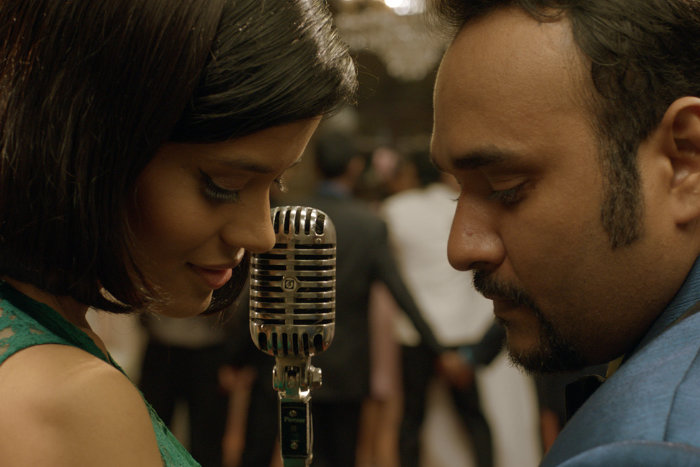
When Director Bardroy Barretto approached us with Nachom-ia Kumpasar, the ambition was staggering: a period musical chronicling the lives of Goan jazz legends Chris Perry and Lorna Cordeiro. The script demanded the smoky jazz clubs of 1960s Bombay, vintage cars, period costumes, and intricate musical set pieces.
The constraints were equally staggering:
- The "Unshootable" City: Shooting a 1960s period piece in modern-day Mumbai is a logistical suicide mission. The city is cluttered with skyscrapers, AC units, and traffic that makes "locking off" a street impossible without a Hollywood budget.
- The Funding Model: There was no studio safety net. The film was funded by 102 individual producers—mostly friends and family. Every rupee spent had to be visible on screen. There was zero margin for "fixer bloat."
- The Sonic Mandate: The music wasn't pre-recorded; it was performed live. The production needed to schedule and manage elderly musicians (sometimes the original legends) on set, requiring a level of sensitivity and precision rarely seen in regional cinema.
The Solution: The "Bombay" Deception
We couldn't take the production to Bombay, so we brought Bombay to Goa. We treated the entire state of Goa as a giant backlot, leveraging our local knowledge to execute a massive "location cheat."
- Architectural Alchemy (Goa as Bombay)
We scouted and secured specific colonial-era buildings in Margao and Panjim that mirrored the Art Deco and Victorian aesthetics of 1960s South Bombay. By carefully framing shots and controlling the streets, we turned the sleepy Latin Quarter into the bustling "Mazagaon" district. We dressed existing halls to double as the iconic "Astoria" and "Venice" jazz clubs, saving the production the crippling cost of building sets from scratch.
- Vintage Logistics
A period film dies the moment a modern Maruti Suzuki drives through the frame. We mobilized Goa’s network of vintage car collectors, sourcing a fleet of 1950s Fiats and Ambassadors. We managed the transport and maintenance of these temperamental vehicles, ensuring they ran when the camera rolled, creating high-production value traffic scenes that looked like they cost millions.
- The "Crowd-Funded" Discipline
Managing a shoot with 102 producers breathing down your neck requires radical transparency. We implemented Western-standard accounting to track every penny. We structured the shoot to maximize the days with the expensive vintage assets and minimized the days with large crowds, ensuring the "money shots" were in the can before the budget ran dry.
The Outcome
Nachom-ia Kumpasar didn't just get made; it became a cultural phenomenon. It won 3 National Awards and 24 International Awards, and was shortlisted for the Oscars.
The film proved that you don't need a Bollywood budget to achieve world-class production value. You just need a Line Producer who knows that the best way to shoot Bombay is to never actually go there.
What The Industry Said
"The film netted the best production design award for recreating the 1960s era of past Goa with extensive detail... [it] stresses on its many strong points like the stellar characters, great sound tracks and a captivating story."
- Daijiworld Media Review
Official Screener...

Have a period script but a modern budget?
Don't build a time machine. Contact us to find the locations that time forgot.